



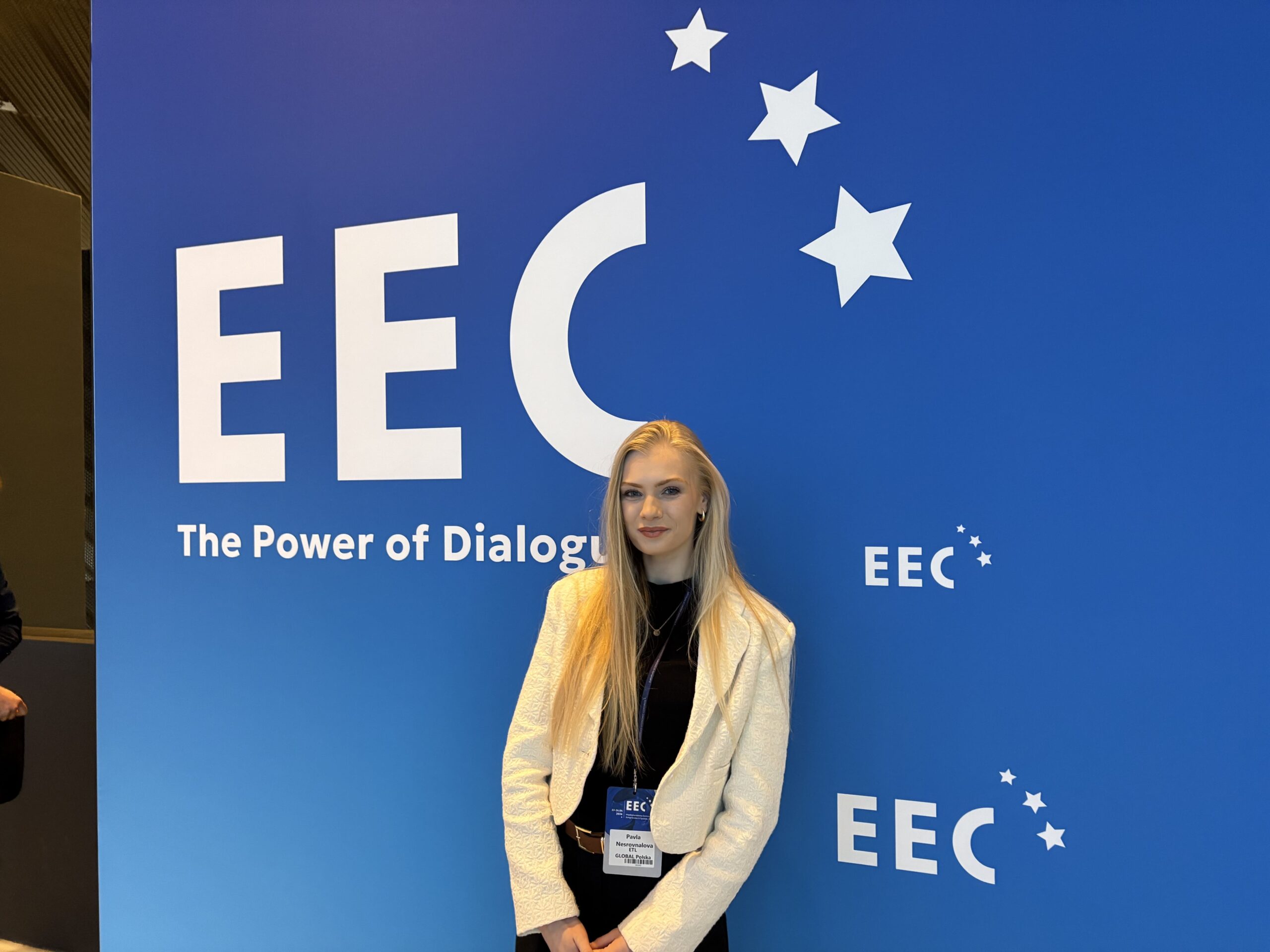
At 24, I have already learned that some of the most valuable opportunities rarely come with a detailed plan.
Over the past few years, I have studied, worked and lived in different countries, participated in international projects, completed internships abroad and learned to navigate environments where neither the language nor the culture was always familiar. Today, I work at ETL Polska, part of an international network where working across borders, cultures and areas of expertise is part of everyday professional life.
Looking back, these two parts of my story are much more connected than I initially realised. Moving between countries taught me to adapt. Learning languages taught me to connect with people. Starting again in unfamiliar environments taught me to ask questions rather than be afraid of not knowing. And ETL Polska gave me the opportunity to turn many of those experiences into professional strengths.
Some of the changes in my life were my own decisions; others came from my personal situation. My partner is a professional basketball player, which means that sometimes the answer to where we will live next is determined by the next basketball season rather than by a carefully prepared five-year plan. For someone who naturally likes to know what comes next, learning to be comfortable with uncertainty has been a process.
Interestingly, the same ability has become extremely valuable in my professional life.
Working in consulting and advisory services means entering new topics, meeting new people and facing challenges you have not necessarily encountered before. And being relatively young in such an environment adds another layer: quite often, you are also the person with the least experience in the room.
But I am gradually learning that this does not always have to be a disadvantage.
GROWTH STARTS WHEN OPPORTUNITY MEETS TRUST
When I joined ETL Polska, one of the things I appreciated most was that my development was not limited by a rigid definition of what someone at the beginning of their career should or should not be doing. I was given the opportunity to learn by actually doing.
Over time, this has meant exposure to different areas of the business, cooperation with colleagues and partners internationally and gradually taking on more responsibility. One of the strongest examples has been my involvement in ESG. What started as an opportunity to contribute developed into the chance to co-create our ESG strategy and become involved in its development and communication.
Being trusted with meaningful responsibility relatively early in my career has changed the way I think about professional growth. We often associate development with promotions or titles, but especially at the beginning of a career, it can mean something different: being invited into new conversations, learning from experienced colleagues, being asked for your perspective or receiving responsibility slightly earlier than expected.
These experiences have reinforced something I had already begun learning outside of work: you do not necessarily need to have done something before to be capable of learning how to do it.
STEPPING OUTSIDE YOUR COMFORT ZONE IS A PROFESSIONAL SKILL
“Step outside your comfort zone” is one of those phrases we hear so often that it can easily lose its meaning. In reality, leaving your comfort zone rarely feels particularly inspiring in the moment.
Sometimes it means moving somewhere where you do not know anyone. Sometimes it means speaking during a meeting in a language that is not your own. And sometimes it means receiving an opportunity at work and wondering whether you really know enough to take it.
I have gradually learned that there is an important difference between not being ready for something and simply not having done it before.
That distinction has become particularly relevant in my work. Consulting and advisory services are built around solving problems, responding to change and continuously learning. New projects can introduce new industries, regulations, clients and perspectives. Technical expertise is fundamental, but the ability to adapt, ask the right questions and learn quickly matters too.
This is why I have gradually changed one of the questions I ask myself. Instead of “Have I done this before?”, I try to ask, “Can I learn how to do this?”
That small change in perspective can make a surprisingly big difference to the opportunities we are willing to accept.
And, of course, willingness alone is not enough. Someone also needs to give you that first opportunity. This is where I have been particularly fortunate in my professional environment at ETL Polska: I have been able to combine my own willingness to try something new with colleagues who were willing to trust me with it.
LANGUAGES OPEN DOORS THAT TECHNOLOGY CANNOT ALWAYS OPEN
Another element that connects my personal and professional life is languages. I have always been a strong advocate of learning them. For me, a language has never been simply another skill to add to a CV or another certificate to collect. It gives us access to another culture, another way of communicating and, to some extent, another way of seeing the world.
Living internationally has made this very tangible for me, but so has working in an international organisation. When colleagues, partners and clients come from different countries and cultural backgrounds, language can be much more than a practical communication tool. It can help build a connection.
At the same time, I increasingly hear a very different argument: Why spend years learning a language when AI will soon be able to translate everything for us?
I understand the argument. AI can already translate documents within seconds, and remove barriers that would have been much more difficult to overcome only a few years ago. I use these tools myself, and I see enormous value in what they can bring to international business.
But removing a language barrier is not the same as creating a human connection.
Communication is about more than transferring information correctly from one language into another. It is about context, humour, emotions, cultural nuances and sometimes simply making the effort to speak to someone in their own language—even imperfectly.
In consulting and advisory services, I believe this matters enormously. Technology can help us analyse information faster, automate processes and communicate more efficiently. But professional services are still built on people, relationships and trust. Clients do not only need the right answer; they also need to feel that the person sitting across from them understands their business, their concerns and the environment in which they operate.
AI can help us understand the words. A language helps us understand the person behind them.
For me, that is where the real value of languages lies. They can open doors, but more importantly, they help us build relationships once those doors are open.
A CAREER DOES NOT HAVE TO FOLLOW A STRAIGHT LINE
If there is one thing that constant change has taught me, it is that careers do not necessarily need to follow a perfectly designed path.
There is a certain pressure that comes with starting a career today. We are expected to choose the right field, develop the right skills, gain experience as early as possible and ideally know where all of this is supposed to lead us.
At 24, I certainly do not know exactly what my career will look like in ten years. And I am increasingly comfortable with that.
My own path has not been particularly linear. Some decisions were motivated by work, some by education, some by curiosity and others simply by life circumstances. Yet looking back, experiences that initially seemed unrelated have gradually started to connect.
Moving internationally developed adaptability. Languages developed my ability to communicate across cultures. Being repeatedly placed in unfamiliar environments made me less afraid of asking questions. And working at ETL Polska has given me a professional environment in which I can actually apply and continue developing those qualities.
This has made me think about career planning differently. Perhaps we do not always need to know exactly where every step will take us. What matters is whether each experience teaches us something, expands our perspective or prepares us for an opportunity we cannot yet see.
WHAT CAN A YOUNGER GENERATION BRING TO CONSULTING?
Being young in a professional environment naturally means having less experience than colleagues who have spent ten or twenty years in the industry. There is no shortcut around experience, and I see enormous value in being able to learn from people who have accumulated it.
At the same time, I do not believe being younger should automatically be seen only as something we need to compensate for.
Younger generations can bring a different perspective to organisations. We have grown up in an increasingly digital and international environment. Many of us are comfortable communicating across borders, adapting to new technologies and looking at topics such as sustainability, workplace culture or digital transformation through a slightly different lens.
The goal should not be to choose between experience and a younger perspective. The real value comes from bringing them together.
This requires something from both sides.
For young professionals, it means finding the balance between humility and confidence. We need to recognise how much we still have to learn while also being confident enough to ask questions, contribute ideas and bring a different perspective when it can add value.
For companies, it means being willing to recognise potential before it comes with ten years of experience.
There is a lot of discussion about what Generation Z expects from employers: flexibility, meaningful work, feedback and rapid development are often mentioned. Sometimes this can be interpreted as young people wanting everything immediately.
I see development somewhat differently.
Wanting to grow does not necessarily mean expecting a promotion after a few months. It can mean wanting to understand the bigger picture, being exposed to different parts of the business, learning from experienced colleagues and gradually receiving more responsibility as your capabilities grow.
That is one of the things I particularly value about my experience at ETL Polska. I have been given space not only to perform my responsibilities, but also to explore where else I can contribute and develop.
For someone at the beginning of their career, that can make an enormous difference.
GROWTH NEEDS COURAGE – BUT ALSO OPPORTUNITY
At 24, I do not have my entire career figured out—and I no longer think I need to.
What I do know is that every country I have lived in, every language I have learned, every person from a different background I have worked with and every situation in which I initially felt slightly out of place has made my comfort zone a little bigger.
But personal willingness to grow is only one side of the equation.
Someone also has to give you the opportunity.
For me, ETL Polska has been an important part of that equation. It has given me an environment where many of the qualities I developed through my international experiences—adaptability, curiosity, languages and openness to unfamiliar situations—could become part of my professional development.
So, if I could share one thought with other young people starting their careers, it would be this: learn languages, explore unfamiliar environments, work with people who think differently from you, ask questions and do not be afraid to be the least experienced person in the room. Do not automatically reject an opportunity simply because you have never done something similar before.
But also pay attention to the environment you choose. Look for people who are willing to teach you, challenge you and eventually trust you with something that feels slightly bigger than what you have done before.
And perhaps there is a message for organisations here as well. Young professionals may not arrive with decades of experience, but they can bring curiosity, adaptability, international perspectives, new ideas and a strong willingness to learn. When those qualities meet experience, mentorship, trust and real responsibility, both sides have an opportunity to grow.
My experience so far has shown me how powerful that combination can be: a young professional willing to step outside their comfort zone and an organisation willing to give them the opportunity to do so.
Sometimes stepping outside your comfort zone opens the door. But having someone on the other side willing to give you a chance is what allows you to walk through it.